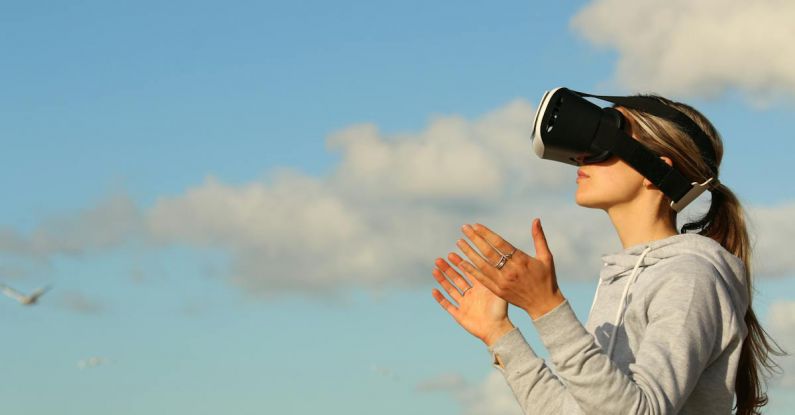
How Is Virtual Reality Being Used beyond Gaming?
Virtual reality (VR) technology has come a long way since its inception, and its applications have extended far beyond the realm of gaming. While VR gaming has been one of the primary drivers of the technology’s growth, its potential goes beyond entertainment. From healthcare to education, VR is being used in innovative ways to enhance various aspects of our lives and experiences.
**Revolutionizing Healthcare**
In the healthcare industry, virtual reality is revolutionizing the way medical professionals train, diagnose, and treat patients. VR simulations allow medical students to practice surgeries in a realistic virtual environment, providing a safe space to hone their skills before performing procedures on actual patients. Surgeons can also use VR to plan complex surgeries by visualizing the patient’s anatomy in 3D, leading to more precise and successful outcomes.
Beyond training, VR is being used for therapeutic purposes. Patients suffering from chronic pain, PTSD, or phobias can undergo exposure therapy in a controlled virtual environment. This immersive therapy helps individuals confront their fears or manage pain in a safe and monitored setting, leading to improved mental and physical well-being.
**Enhancing Education**
In the field of education, virtual reality is transforming how students learn and engage with course material. VR simulations allow students to explore historical sites, conduct scientific experiments, or travel to far-off places without leaving the classroom. This hands-on approach to learning enhances retention and understanding by making subjects more interactive and engaging.
Moreover, VR is being used to cater to diverse learning styles and provide personalized education experiences. Students with disabilities or learning difficulties can benefit from customized VR programs that adapt to their needs, making education more inclusive and accessible to all.
**Improving Training and Skills Development**
In industries such as aviation, engineering, and construction, VR is being used to train employees and enhance their skills in a simulated environment. Pilots can practice emergency procedures in a virtual cockpit, engineers can troubleshoot complex machinery without real-world consequences, and construction workers can familiarize themselves with building plans before stepping foot on a construction site.
This hands-on training approach not only improves safety and efficiency but also reduces costs associated with traditional training methods. Employees can undergo realistic simulations that mimic real-world scenarios, allowing them to gain valuable experience and expertise in a risk-free environment.
**Enriching Entertainment and Media**
While gaming remains a significant driver of VR technology, entertainment and media industries are finding new ways to leverage virtual reality to create immersive experiences for audiences. From virtual concerts and art exhibitions to interactive storytelling and 360-degree videos, VR is reshaping how we consume content and engage with art and culture.
For example, museums and galleries are using VR to bring art masterpieces to life, allowing viewers to explore paintings and sculptures in a virtual space. Filmmakers are experimenting with VR storytelling techniques to create interactive narratives that blur the line between reality and fiction, providing audiences with unique and engaging experiences.
**The Future of Virtual Reality**
As virtual reality technology continues to evolve and become more accessible, its applications will only continue to expand across various industries and sectors. From healthcare and education to training and entertainment, VR is reshaping the way we work, learn, and interact with the world around us.
With ongoing advancements in VR hardware and software, we can expect to see even more innovative uses of the technology in the future. Whether it’s revolutionizing medical treatments, enhancing educational experiences, or creating immersive entertainment options, virtual reality is poised to transform our lives in ways we have yet to imagine.


